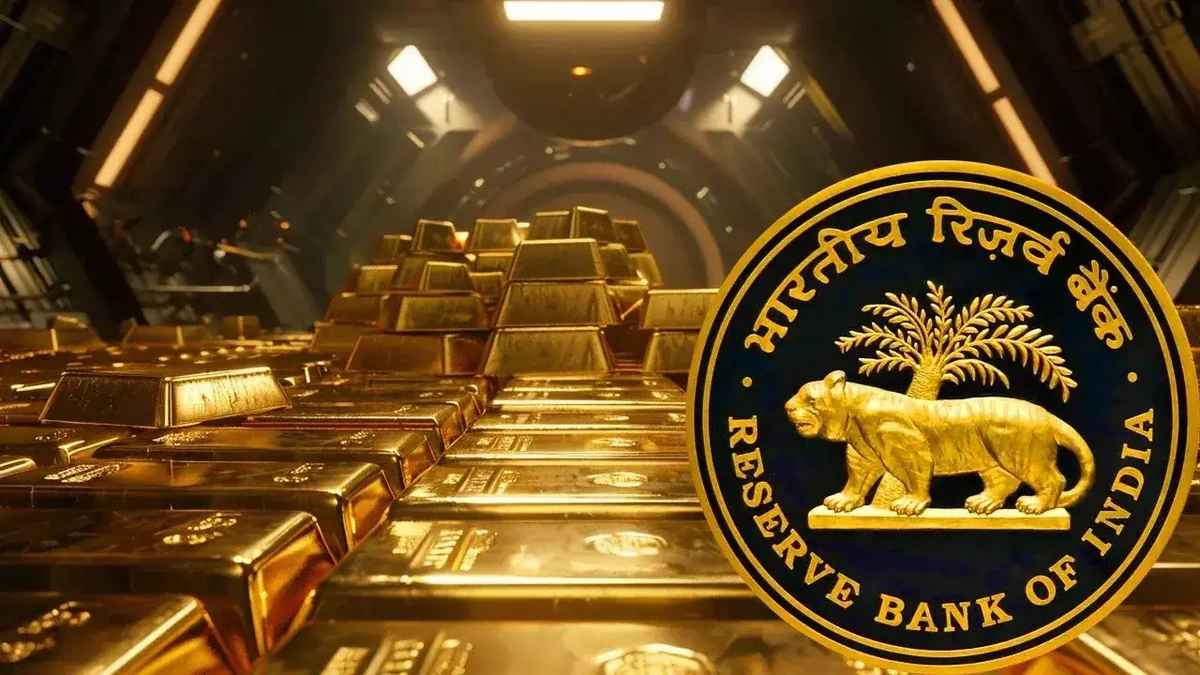
Alright, let’s talk gold. Not just any gold, but India’s gold reserves. The latest report from the RBI (Reserve Bank of India) is out, and it’s flashing some pretty interesting numbers. India’s gold reserves have jumped by 25.45 tonnes in fiscal year 2025. Now, on the surface, that might seem like just another financial headline. But trust me, there’s a lot more to unpack here, especially for us in India.
Why This Gold Rush Matters | The Big Picture

So, why should you care about this increase? Let’s be honest, most of us aren’t stashing gold bars under our mattresses. But the amount of gold reserves a country holds is a pretty significant indicator of economic health and stability. Think of it like this: in a world where currencies fluctuate faster than the stock market, gold remains a constant. It’s a safe haven asset, and a growing reserve shows that India is preparing for or at least hedging against potential economic storms. Sovereign gold reserves act as a cushion. What fascinates me is how this increase reflects a broader global trend where central banks are bolstering their gold holdings amid geopolitical uncertainty.
A larger RBI gold holdings also gives the country more leverage in international trade and finance. It strengthens the rupee, makes imports cheaper, and improves our overall creditworthiness. It’s not just about the shiny metal; it’s about financial power. The Sensex Market Analysis gives a detailed view of current trends and market health.
Gold as a Hedge Against Uncertainty
We’ve all seen how quickly things can change – global pandemics, trade wars, economic downturns. In times like these, gold shines (pun intended!). It’s considered a safe haven asset because its value tends to hold steady or even increase when other investments are tanking. The RBI increasing its investment in gold is essentially a vote of confidence in its ability to weather any financial turbulence. It acts as a buffer to manage the country’s external debt effectively. It makes me think about my grandfather who always kept a small stash of gold – his personal safety net. The RBI is doing the same for the nation.
But here’s the thing: it’s not just about protecting against the bad times. Strategic Indian Stocks can also act as a diversification strategy, reducing the overall risk to the central bank’s portfolio. It’s smart, proactive financial management. This also directly influences the fluctuations in gold prices .
The Impact on the Indian Economy
Okay, so the RBI has more gold. How does that actually affect you and me? Well, a stronger rupee (thanks to those reserves) can make imported goods like electronics and fuel cheaper. That’s a win for consumers. Plus, it can attract more foreign investment, boosting job creation and economic growth. Let’s be honest, we could all use a little boost these days! The increase in gold holdings by central banks has a trickle down effect.
And here’s another thought. A stable economy is more likely to invest in infrastructure, education, and healthcare – things that directly improve the quality of life for all Indians. The gold reserve management is not just some abstract financial concept; it’s a cornerstone of our economic stability and growth.
What to Watch For | Future Trends in India’s Gold Strategy
So, what’s next? Will the RBI continue to increase its gold reserves? Will this impact gold prices? All good questions. Given the current global climate, it’s likely that the central bank will continue to see gold as a valuable asset. Keep an eye on the RBI’s future statements and policies. They’ll offer clues about where India is headed in terms of gold monetization scheme and overall financial strategy.
What fascinates me is the potential for India to become an even bigger player in the global gold market. As our economy grows, so too will our influence. It’s an exciting prospect. You can monitor economic trends from theRBI official website.
FAQ | Understanding India’s Gold Reserves
Why do central banks hold gold reserves?
Central banks hold gold reserves as a store of value, a hedge against inflation, and to diversify their foreign exchange reserves. It provides financial security during economic uncertainty.
How does RBI’s gold reserve affect the Indian rupee?
Increased RBI gold holdings can strengthen the Indian rupee, making imports cheaper and potentially lowering inflation.
Where does the RBI store its gold reserves?
The RBI stores its gold reserves both domestically and in overseas vaults, including the Bank of England.
Can individuals invest in gold through the RBI?
Yes, individuals can invest in gold through schemes like Sovereign Gold Bonds issued by the RBI.
How often does the RBI report on its gold reserves?
The RBI provides updates on its gold reserves periodically through its annual reports and press releases.
Ultimately, the RBI’s decision to increase its gold reserves is a strategic move that reflects a cautious yet confident approach to navigating the global economic landscape. It’s a move that benefits all of us in the long run. So next time you hear about gold prices, remember there’s a whole lot more going on beneath the surface. It’s about India’s economic security and its place in the world.