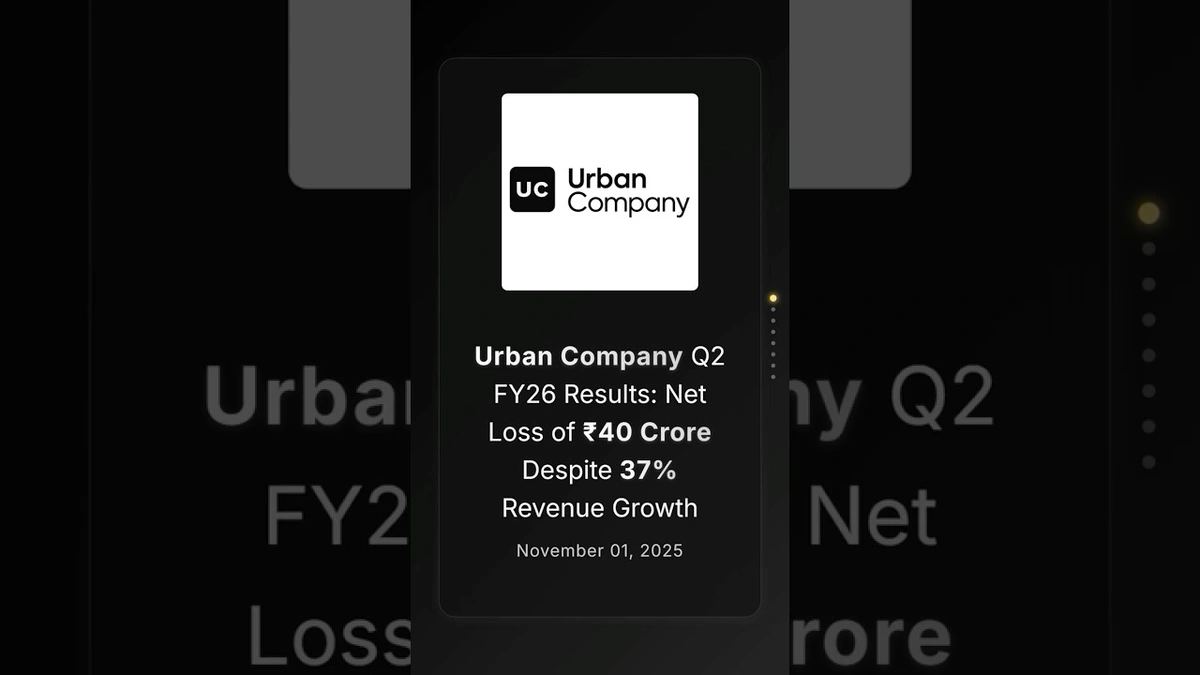
Urban Company, the name synonymous with at-home services in India, has been making headlines recently but not exactly for the reasons they’d hoped. News about their increasing losses, particularly in the wake of their new instant services, has been swirling. But here’s the thing: it’s not enough to just report the numbers. Let’s dive into why this matters, especially for you, the Indian consumer, and the thousands of service professionals who rely on the platform.
The Instant Gamble | Convenience vs. Cost

So, what’s the deal with these ‘instant services’ anyway? The idea is simple: provide services think quick fixes, handyman tasks, or rapid cleaning at a moment’s notice. Sounds fantastic, right? In theory, yes. But the execution, as always, is where things get tricky. What fascinates me is the level of investment that goes into such a service, which, for now, doesn’t seem to be reaping the rewards.
The allure of instant services lies in capturing the impulse buyer. Need a tap fixed right now? Don’t want to wait until tomorrow? Urban Company aims to be your go-to. But providing that level of immediacy requires a robust infrastructure: a readily available pool of professionals, efficient logistics, and, crucially, a pricing model that works for both the company and the service provider. This is where the increased Urban Company loss comes into play.
And the thing is, competing in the on-demand space is a bloodbath. You’re battling not just other established players, but also individual contractors and smaller, local service providers. Standing out requires deep pockets and a willingness to burn cash at least initially. This is a business built on volume. A common mistake I see companies make is underestimating the initial investment required to gain market share.
Decoding the Financial Statements | What Numbers Don’t Tell You
Let’s be honest, financial statements can be drier than the Sahara. But hidden within those numbers are crucial insights into Urban Company’s strategy and challenges. It’s not just about the loss figure itself; it’s about marketing expenses , operational costs, and the incentives being offered to service professionals. Did the incentives work? Are they getting value for that money, or is it essentially funding the competition? These are the kinds of questions you have to ask.
Often, heavy losses in the initial stages of a new venture are expected. Companies invest heavily in marketing and infrastructure, anticipating future returns. Think of it like planting a mango tree: you spend time and resources nurturing it before you see the fruit. The question is: is Urban Company’s mango tree showing signs of bearing fruit, or is it wilting under the Indian sun?
And let’s not forget the impact of external factors. The Indian economy, consumer spending habits, and the rise of competing platforms all play a role. What fascinates me is that how external factors are affecting business profitability .
The Service Professional’s Perspective | A Double-Edged Sword
Now, let’s shift gears and consider the perspective of the service professionals the backbone of Urban Company. For many, the platform offers a flexible way to earn a living, connect with customers, and build their own brand. But the increased emphasis on instant services can create a double-edged sword. While it offers the potential for more gigs, it also puts pressure on them to be available at a moment’s notice. This can lead to increased competition among professionals, potentially driving down earnings.
According to the latest reports, several service professionals have reported a change in the earning potential of Urban Company. Is it sustainable? Is the trade-off worth it? These are critical questions that need to be addressed to ensure the long-term viability of the platform.
I initially thought that this instant service was a good idea, but then I realized that it might not be sustainable for the service professionals.
The Future of Urban Company | Adapting to the Evolving Landscape
So, what does the future hold for Urban Company? Will they weather the storm and emerge stronger, or will the increased losses prove to be a fatal blow? The answer, as always, is complex. But one thing is clear: the company needs to adapt to the evolving landscape of the Indian market. As per the guidelines of business experts, they will have to figure it out sooner rather than later.
According to industry analysts, Urban Company’s success hinges on several key factors: optimizing pricing, improving operational efficiency, and, crucially, fostering a strong relationship with their service professionals. Let me rephrase that for clarity: Happy professionals translate to happy customers, which translates to a healthy bottom line. The company must prioritize their most valuable asset: the people who provide the services. If they can achieve that, they’ll be poised to dominate the home services market for years to come.
But, there’s a need to promote https://lctresult.com/lenskart-ipo-8/ more and more.
Looking Ahead | Beyond the Balance Sheet
In conclusion, Urban Company’s increasing losses are a cause for concern, but they don’t necessarily spell doom. It’s a signal that the company needs to re-evaluate its strategy, prioritize sustainability, and focus on building a mutually beneficial ecosystem for both consumers and service professionals. The company’s revenue growth can be a key to recovery.
Remember, the Indian market is unique. What works in Silicon Valley might not work here. Urban Company needs to embrace its Indian identity, understand the nuances of the local market, and build a business that is not only profitable but also socially responsible. Only then will it truly succeed. And according to Wikipedia , this change is happening all over the globe.
Moreover, https://lctresult.com/itc-shares-q-results/ need to be promoted more.
FAQ
Will Urban Company increase prices to offset losses?
It’s possible. Companies often adjust pricing strategies to improve profitability. Keep an eye out for changes in service costs.
Are service professionals leaving Urban Company?
There have been reports of some professionals seeking other opportunities. Monitoring the platform for service availability and quality can give you insights.
What if Urban Company goes out of business?
While unlikely in the immediate future, it highlights the importance of supporting various local service providers as well.
Is Urban Company still a good option for finding reliable services?
For now, yes. They still offer a wide range of services and vetted professionals. However, it’s always wise to compare prices and read reviews before booking.