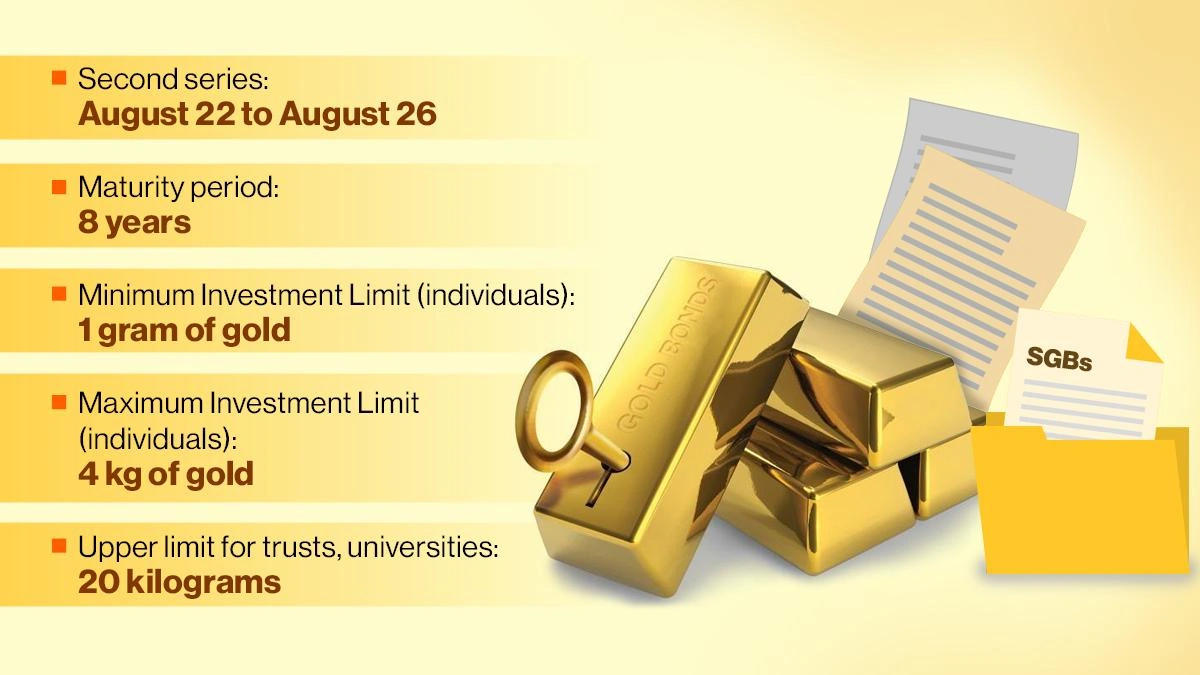
Okay, let’s talk about Sovereign Gold Bonds (SGBs). You’ve probably heard of them government-backed securities that let you invest in gold without actually holding the shiny metal. But here’s the thing: what happens when you need the money before the bond matures? That’s where early redemption comes in, and recent news from the RBI is causing quite a stir. Specifically, investors are seeing gains as high as 166%! But before you jump in headfirst, let’s unpack what this all means. Why is this happening now? What are the implications for you, the investor? And how can you make the most of this opportunity? Consider this your friendly guide to navigating the world of SGB early redemption.
Why the Sudden Surge in SGB Redemption Value?

So, why are Sovereign Gold Bonds suddenly performing so well in early redemption scenarios? It’s not just magic, though it might feel that way to some investors. The primary driver is the increase in gold prices globally. Gold, as you know, is often seen as a safe haven asset, and in times of economic uncertainty (like, say, a global pandemic or geopolitical tensions), people flock to it, driving up the price. But here’s where it gets interesting: the RBI’s pricing mechanism for early redemption is linked to the simple average of the closing gold price of the previous three business days, published by the India Bullion and Jewellers Association Ltd (IBJA). This means that if gold prices have risen significantly since you initially invested, you stand to gain handsomely upon early redemption.
The RBI’s decision to announce the redemption price beforehand also plays a crucial role. This transparency allows investors to make informed decisions, weighing their options carefully before opting for early redemption. It’s a far cry from the opaque processes of yesteryear, and honestly, it’s a welcome change. Speaking of transparency, you can find more information about SGBs on the RBI website .
How to Calculate Your Potential Gains (and Avoid Pitfalls)
Alright, let’s get practical. How do you figure out if early redemption is the right move for you? First, you need to know the issue price of your Sovereign Gold Bonds. This is the price you paid when you initially invested. Then, compare it to the RBI’s announced redemption price. The difference is your potential gain. But remember, it’s not quite that simple. There are tax implications to consider. Any gains you make on early redemption are subject to capital gains tax, depending on your holding period. If you redeem the bonds after three years, the gains are taxed as long-term capital gains at 20% with indexation benefits. But if you redeem before three years, the gains are added to your income and taxed according to your income tax slab. A common mistake I see people make is forgetting about these tax implications and then being surprised when tax season rolls around. Don’t be that person!
Also, consider why you’re redeeming in the first place. Do you genuinely need the money, or are you simply chasing the high of a 166% return? If you don’t need the funds immediately, it might be worth holding onto the bonds until maturity, as the returns are generally tax-free if held until maturity. Let me rephrase that for clarity: holding till maturity could save you a packet in taxes. Just something to keep in mind.
The Broader Implications | What This Means for the Indian Economy
Okay, zooming out a bit. This whole Sovereign Gold Bond early redemption situation isn’t just about individual investors making a quick buck (though, let’s be honest, that’s a nice perk). It has broader implications for the Indian economy. The success of SGBs, in general, helps reduce our reliance on physical gold imports, which puts a strain on our current account deficit. When people invest in SGBs, they’re essentially diverting funds that would otherwise be used to buy physical gold. This, in turn, reduces the demand for imported gold and helps stabilize the rupee. What fascinates me is how a seemingly small investment decision can have such a ripple effect on the larger economy. It’s like a tiny cog in a giant machine, but it plays a crucial role. I initially thought this was straightforward, but then I realized its way more complex. Moreover, the government’s ability to manage and promote such schemes reflects its commitment to financial inclusion and responsible investment practices.
But, there’s another side to it. High redemption rates could indicate a lack of confidence in other investment avenues or a sudden need for liquidity among investors. This could be a signal for policymakers to address underlying economic concerns and ensure a stable investment climate. And , remember to check out SGB Returns to stay updated with market trends.
Navigating the Future | SGBs as Part of Your Investment Portfolio
So, where do Sovereign Gold Bonds fit into your overall investment portfolio? Well, that depends on your individual risk tolerance, investment goals, and time horizon. If you’re a conservative investor looking for a safe haven asset, SGBs can be a good option. They offer a guaranteed return (in the form of interest payments) and the potential for capital appreciation (if gold prices rise). But, they’re not a get-rich-quick scheme. They’re more like a slow and steady tortoise in a race full of hares. A common mistake I see people make is putting all their eggs in one basket. Diversification is key to managing risk, so don’t put all your money into SGBs. Spread it out across different asset classes, such as stocks, bonds, and real estate.
The one thing you absolutely must double-check before investing in SGBs is the lock-in period. While early redemption is an option, it’s not always the most financially advantageous one. So, make sure you’re comfortable with the lock-in period before you invest. According to the latest circular on the official RBI website ( rbi.org.in), the lock-in period for SGBs is typically five years, with an option to exit after the fifth year. This could change in the future, of course, but that’s the current rule of the game.
Frequently Asked Questions (FAQ)
What happens if I forgot my application number?
Don’t panic! Visit the RBI’s SGB portal or the respective bank’s website through which you invested. There’s usually an option to retrieve your details using your PAN or other identification information.
Are SGBs a better investment than physical gold?
It depends. SGBs offer interest, eliminate storage costs, and ensure purity. Physical gold offers tangible ownership. Consider your needs and preferences.
What are the tax implications of selling SGBs before maturity?
Gains are subject to capital gains tax, based on your holding period. Long-term (over 3 years) gains are taxed at 20% with indexation. Short-term gains are added to your income and taxed accordingly.
Can I use SGBs as collateral for a loan?
Yes, SGBs can be used as collateral. Banks generally accept them as security for loans, making them a relatively liquid asset.
How often are new tranches of SGBs issued?
The RBI announces the schedule for new SGB issuances periodically. Keep an eye on their official notifications for updates.
In conclusion, the recent surge in Sovereign Gold Bond (SGB) early redemption values, driven by rising gold prices and transparent RBI policies, presents a unique opportunity for investors. But it’s not just about the potential 166% gain; it’s about understanding the underlying economics, tax implications, and the role of SGBs in your overall financial strategy. The next step is yours: educate yourself, assess your financial situation, and make informed decisions. Happy investing!