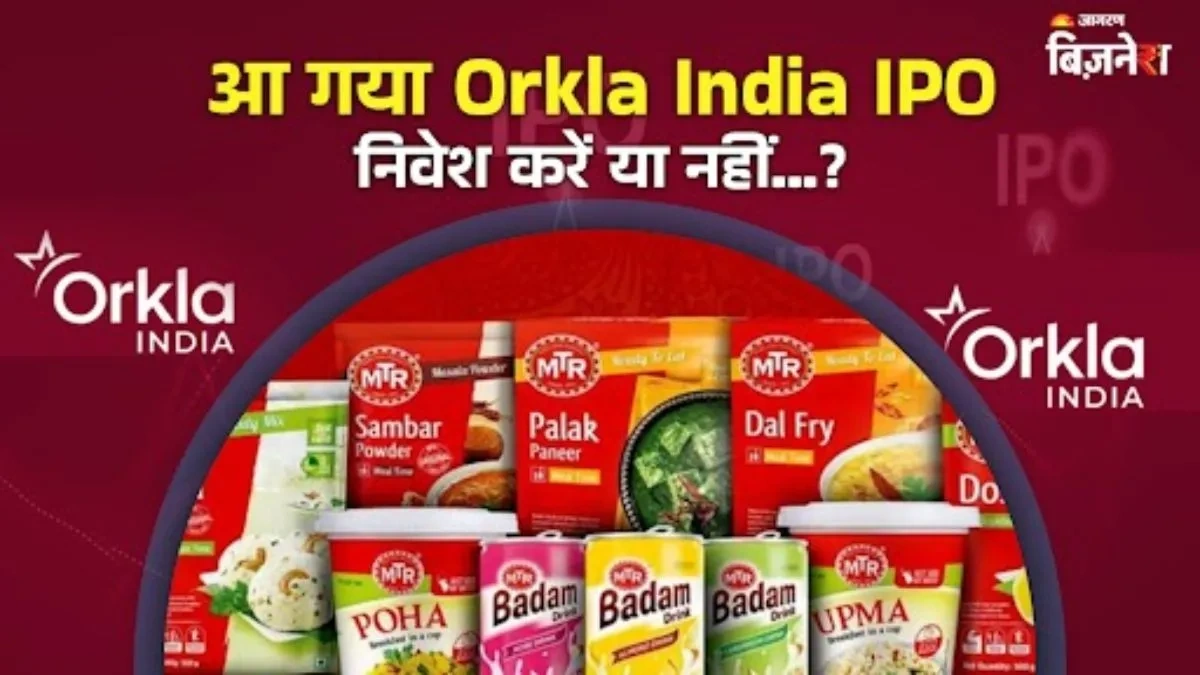
So, the Orkla India IPO has wrapped up its subscription period. You’ve probably seen the headlines: “Orkla India IPO Subscribed,” followed quickly by “…but GMP dips.” If you’re like most folks I know, your first thought is, “What does that even mean?” And more importantly, should I be throwing my hard-earned rupees at this thing? Let’s be honest – IPOs can feel like a high-stakes gamble, especially when the grey market premium (GMP) starts doing the cha-cha. We’re going to break it down in a way that actually makes sense, and hopefully, helps you make a well-informed decision.
Understanding the Hype (and the Dip)

Let’s tackle the basics first. Orkla is a Norwegian conglomerate, and Orkla India is their arm here, dealing in everything from food products to personal care. An IPO, or Initial Public Offering, is when a private company offers shares to the public for the first time. It’s a way for the company to raise capital, and for investors like you and me to get a piece of the action. But, here’s the thing: the Orkla India IPO subscription status doesn’t tell the whole story. Just because an IPO is subscribed doesn’t automatically mean it’s a golden ticket. What fascinates me is how the GMP plays into investor psychology.
The Grey Market Premium (GMP) is essentially the premium people are willing to pay for the shares before they’re officially listed on the stock exchanges. It’s an unofficial, over-the-counter market, and it can be a good indicator of investor sentiment. A high GMP usually signals strong demand, while a dipping GMP, like we’re seeing with Orkla, suggests that the initial enthusiasm might be cooling off. But, but, but… (yes, a big BUT here) the GMP is not the be-all and end-all. Don’t get swayed by only GMP. Always consider financial performance. Here’s a great resource to track Market performance.
Why the GMP Matters (and Why It Doesn’t)
Okay, let’s dig a bit deeper into the significance (and limitations) of the GMP. On one hand, a healthy GMP can indicate strong investor confidence. It suggests that people are expecting the shares to list at a premium, and they’re willing to pay extra to get in early. This can create a positive feedback loop, driving up demand and potentially leading to a successful listing. Think of it as a self-fulfilling prophecy, to some extent. It is also important to consider the company valuation.
However, and this is crucial, the GMP is also highly speculative and can be easily manipulated. It’s not regulated, and it’s based on informal trading. So, a dipping GMP doesn’t necessarily mean the IPO is a dud. It could simply mean that the initial hype has died down, or that some investors are taking profits. Or, it could be a sign that the market is reassessing the company’s valuation. The Orkla India IPO is not a dud. If you are looking to invest, make sure to review the risk factors.
Should You Invest? A Framework for Decision-Making
So, we arrive at the million-rupee question: Should you invest in the Orkla India IPO? Here’s the thing: I can’t give you a definitive yes or no. What I can do is give you a framework for making your own informed decision. A common mistake I see people make is treating IPOs like a get-rich-quick scheme. They aren’t. Investing in an IPO should be part of a well-thought-out investment strategy, not a spur-of-the-moment decision based on hype.
First, do your homework. I initially thought this was straightforward, but then I realized how many people skip this crucial step. Read the Orkla India IPO prospectus carefully. Understand the company’s business model, its financials, its growth prospects, and the risks involved. Don’t just rely on what you read in the news or hear from your friends. Go straight to the source. Then, assess your risk tolerance. Are you comfortable with the possibility of losing money? IPOs can be volatile, and there’s no guarantee that the shares will perform well after listing. If you’re risk-averse, you might want to sit this one out, or allocate only a small portion of your portfolio to the IPO. A great way to reduce your risk is to compare with other consumer goods companies. Do not get emotionally invested. Emotions can be deceiving.
Finally, consider the long-term potential. Are you investing for the short-term gains, or do you believe in the company’s long-term prospects? If you’re in it for the long haul, a temporary dip in the GMP shouldn’t scare you off. But if you’re looking to make a quick buck, be prepared to sell your shares at the first sign of trouble. It is important to track the listing gains.
Beyond the Buzzwords | The Real Story of Orkla India
Let’s rephrase that for clarity. What’s the real story behind Orkla India? They operate in a sector that’s generally considered defensive – people need food and personal care products regardless of the economic climate. This provides a certain level of stability. Also, India’s consumer market is growing rapidly, driven by a rising middle class and increasing disposable incomes. This presents a significant growth opportunity for Orkla India. Plus, a great company culture can improve overall work quality. Here is a story on how a toxic workplace can effect market value.
However, there are also challenges. Competition in the Indian consumer market is fierce, with both domestic and international players vying for market share. Orkla India will need to differentiate itself through innovation, branding, and effective distribution. Also, fluctuations in commodity prices and currency exchange rates can impact the company’s profitability. Furthermore, market volatility can effect the overall IPO results. Overall, the market capitalization should show an increase overtime.
Final Thoughts | It’s Your Call
Ultimately, the decision of whether or not to invest in the Orkla India IPO is yours. Don’t let anyone pressure you into doing something you’re not comfortable with. Do your research, assess your risk tolerance, and make a decision that aligns with your investment goals. Remember, investing is a marathon, not a sprint. And sometimes, the best investment is the one you don’t make. The Orkla India IPO price band can be alluring, but be mindful and thoughtful of your investments.
FAQ Section
Frequently Asked Questions (FAQs)
What does “subscribed” mean in the context of an IPO?
It means that the total number of bids received for the IPO shares is more than the number of shares offered by the company.
What if I applied for the IPO, but the GMP is now lower than when I applied?
The GMP is just one factor. Focus on the company’s fundamentals and your own investment strategy. If you still believe in the company’s long-term potential, hold on to your shares.
Where can I find the Orkla India IPO prospectus?
You can find it on the websites of the lead managers to the issue, or on the SEBI website.
What are the key risks associated with investing in IPOs?
Volatility, lack of historical data, and potential for overvaluation are some of the key risks.
How is the final Orkla India IPO allotment status determined?
If the IPO is oversubscribed, allotment is usually done on a lottery basis for retail investors.
What is the Orkla India IPO expected listing price?
The expected listing price can be determined with a bit of research. However, keep in mind that external factors can impact this projection.