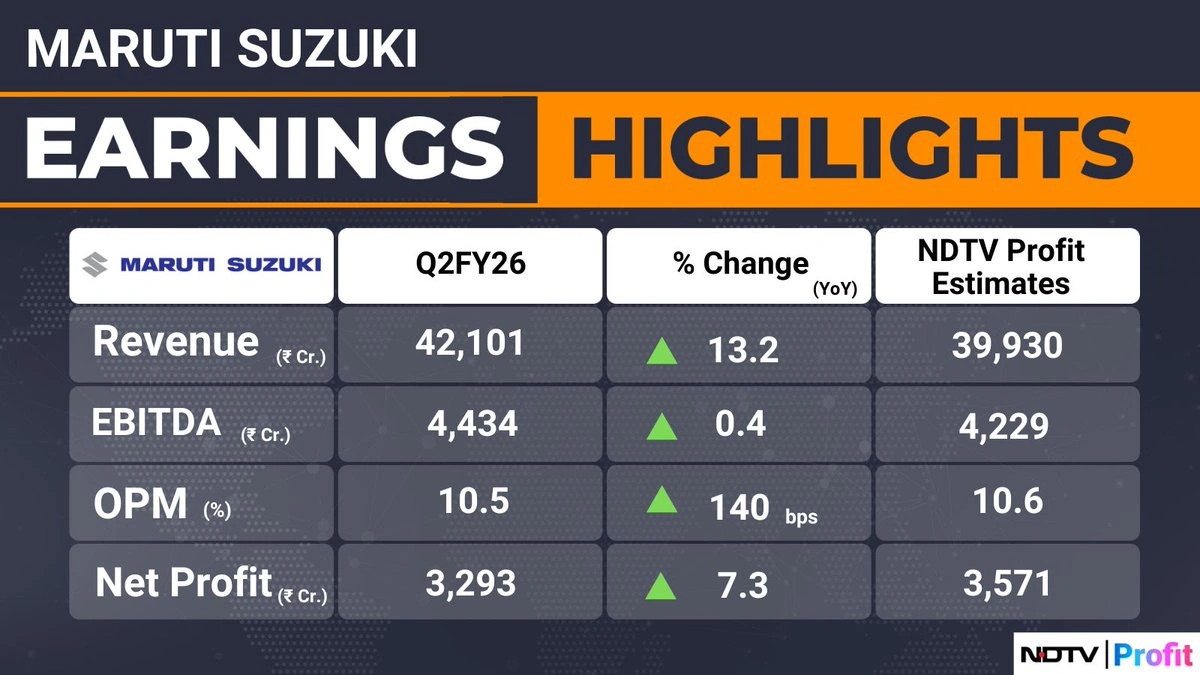
So, Maruti Suzuki just dropped its Q2 earnings report, and the headline is that profits are up 7% to Rs3,293 crore. Sounds good, right? But let’s be honest, that number alone doesn’t tell us much. What’s really going on under the hood? What’s driving this growth, and more importantly, is it sustainable? I initially thought this was just another quarterly report, but then I realized there’s a bigger story to unpack here, especially for us in India.
Decoding the Export Surge
The headline mentions strong exports , but let’s dig deeper. Why are Maruti Suzuki’s exports doing so well? Is it simply increased demand in other countries, or is there something more strategic at play? According to a report by the Society of Indian Automobile Manufacturers (SIAM), Indian auto exports have been steadily rising, and Maruti Suzuki seems to be capitalizing on this trend.SIAM Website What fascinates me is how Maruti Suzuki is positioning itself as a global manufacturing hub. It’s not just about selling cars in India anymore; it’s about building them here for the world. This shift is significant because it can lead to more jobs, increased investment, and a stronger economy overall. And, of course, a healthier bottom line for Maruti. But, is it all sunshine and roses?
The Rupee’s Role and Raw Material Costs
Here’s the thing – a weaker rupee can make exports more competitive, boosting revenue in rupee terms. But it also means importing raw materials becomes more expensive. It’s a double-edged sword. Maruti Suzuki is likely navigating this by hedging their currency exposure – a strategy where they try to lock in exchange rates in advance. But let me rephrase that for clarity – even with hedging, fluctuations can still impact profitability. Moreover, the cost of raw materials like steel and aluminum has been volatile. If Maruti Suzuki can’t effectively manage these costs, it could eat into their profit margins, despite the export boom. I see people often overlooking the importance of currency fluctuations when looking at financial reports, and it’s a common mistake.
Domestic Demand | Still the Kingmaker
While exports are booming, let’s not forget the Indian market. Domestic auto sales are still the bread and butter for Maruti Suzuki. A healthy Indian economy means more people are buying cars. Interest rates, fuel prices, and overall consumer sentiment all play a crucial role. For example, if interest rates rise, car loans become more expensive, potentially dampening demand. A common mistake I see is people assuming that export success automatically translates to overall success. The one thing you absolutely must double-check is how the domestic market is performing, even with strong exports. ITC Q Results offer an interesting contrast in domestic vs exports. According to data from the Ministry of Road Transport and Highways, vehicle registrations have shown a positive trend, indicating sustained demand.
Strategic Decisions and Future Outlook
So, what’s next for Maruti Suzuki? Are they planning to launch new models? Are they investing in electric vehicles (EVs)? These are the questions that will determine their long-term success. Let’s be honest – the auto industry is rapidly changing, with a growing emphasis on sustainability. Maruti Suzuki needs to adapt to these changes to stay ahead of the curve. For instance, investing in electric vehicle technology could open up new markets and attract environmentally conscious consumers. Also, according to recent news, Maruti Suzuki is investing heavily in expanding its production capacity, signaling confidence in future demand. Air India Debt could also impact the automobile sector in an indirect manner by influencing overall economic outlook. I initially thought this was straightforward, but then I realized that the level of competition in the Indian automotive market is getting intense.
The Competitive Landscape and Market Share
The Indian auto market is a battleground, with global giants like Hyundai, Tata Motors, and Mahindra vying for market share. Maruti Suzuki needs to continuously innovate and offer compelling products to maintain its dominance. As per the latest data from the Federation of Automobile Dealers Associations (FADA), Maruti Suzuki holds a significant market share , but competition is heating up. The key is to understand what Indian consumers want – fuel-efficient cars, reliable performance, and affordable prices. What’s fascinating me is how quickly the Indian automotive market is evolving, with new players and technologies constantly emerging. This ultimately benefits the consumer by offering more choice and better value.
FAQ
What is contributing to the increase in Maruti Suzuki’s exports?
Increased demand in overseas markets and strategic positioning as a global manufacturing hub.
How do fluctuations in the rupee affect Maruti Suzuki’s profitability?
A weaker rupee can boost export revenue but increase the cost of imported raw materials.
Is Maruti Suzuki investing in electric vehicles?
Yes, the company is investing in electric vehicle technology to adapt to the changing automotive landscape.
What is the competitive landscape like for Maruti Suzuki in India?
The Indian auto market is highly competitive, with companies like Hyundai, Tata Motors, and Mahindra vying for market share.
How important is the domestic market for Maruti Suzuki compared to exports?
The domestic market is still very important, although exports are a significant growth driver.
So, while the 7% profit increase is good news, the real story is about how Maruti Suzuki is navigating a complex global landscape, managing costs, adapting to changing consumer preferences, and positioning itself for future growth. It’s not just about the numbers; it’s about the strategy, the execution, and the ability to stay ahead of the competition. And that, my friend, is something to watch closely. It’s a case study in how to thrive in a dynamic and competitive market.