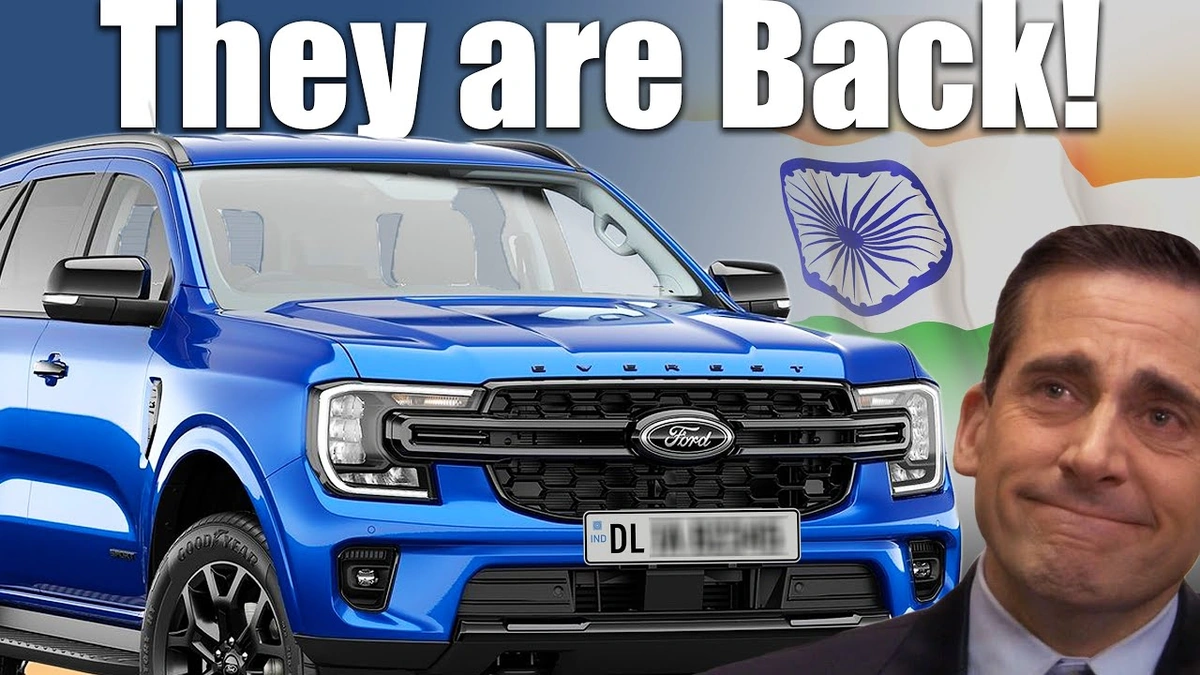
Ford’s exit from India left a void, didn’t it? But, hold on – the automotive giant just dropped a bombshell: a $400 million investment and a promise of a Ford India comeback . Let’s be honest, that’s a headline grabber. I initially thought this was just another rumor, but the details suggest something far more significant.
The Real Reason Behind Ford’s Re-entry | Beyond Just Cars

So, why this change of heart? After all, Ford faced significant challenges in the Indian market, struggling to gain substantial market share. The answer, as always, is multi-layered. But the core of it? It’s not necessarily about mass-market vehicles this time. It’s about India’s burgeoning role as a global manufacturing and export hub, especially for electric vehicles (EVs) and components. India offers a strategic advantage: a skilled workforce, relatively lower labor costs, and government incentives pushing for EV adoption and export. Ford recognizes this and wants a slice of this pie.
Ford’s previous struggles in India were largely due to a lack of competitive products and a failure to adapt quickly to changing market demands. They were playing catch-up, and it was a tough game. But, and this is crucial, this new investment isn’t about a direct replay of the past. This is about leveraging India’s potential in the global automotive supply chain.
Let me rephrase that for clarity: Ford isn’t necessarily aiming to directly compete with Maruti Suzuki or Tata Motors in the domestic market, at least not initially. Instead, the focus is likely on manufacturing and exporting vehicles and components, potentially including EVs. Think of it as Ford using India as a strategic export base to serve other markets. This could include EV parts manufacturing and eventually, maybe even EV assembly.
How Ford Plans to Execute This | A Phased Approach
Okay, so how will Ford actually pull this off? It won’t be an overnight transformation. Expect a phased approach. First, utilizing existing manufacturing facilities (likely retooled for export-oriented production). Second, focusing on specific product lines that align with global demand, such as EVs and related components. Third, a gradual expansion of operations based on market response and export opportunities.
A common mistake companies make is underestimating the complexities of the Indian market. Ford needs to learn from its past missteps. Here’s the thing: Success hinges on a deep understanding of local consumer preferences, robust supply chain management, and effective cost control. And, crucially, building strong relationships with local suppliers and partners. Ford must avoid a top-down approach and instead embrace collaboration.
Remember, the Indian automotive market is incredibly competitive. To ensure a successful Indian automotive sector , Ford needs to differentiate itself. Focusing on exports and specialized products like EVs is a smart move. This allows them to avoid direct competition with established players while still capitalizing on India’s manufacturing advantages.
The Ripple Effect | Jobs, Economy, and the EV Revolution
This $400 million investment isn’t just about Ford. It has broader implications for the Indian economy. Think about the potential job creation – not just in manufacturing but also in related industries like logistics, supply chain management, and engineering. That’s a significant boost.
And, of course, it further strengthens India’s position in the global EV revolution. This investment signals confidence in India’s ability to become a major player in the EV supply chain. The government’s push for EV adoption, coupled with incentives for manufacturing and export, is clearly paying off.
According to industry analysts, this move by Ford could encourage other global automakers to consider India as a manufacturing and export base. That’s a huge win for the “Make in India” initiative. Let’s look at the Indian economy . It will be a boon for the economy in general.
Navigating Potential Roadblocks | Challenges Ahead
But, let’s not get carried away. There are potential roadblocks. One major challenge is infrastructure. India’s infrastructure, while improving, still lags behind other major manufacturing hubs. Reliable power supply, efficient transportation networks, and adequate port facilities are crucial for smooth operations. Then there’s the regulatory environment. While the government is actively promoting manufacturing, navigating the complex web of regulations can still be a hurdle. According to Wikipedia, Ford is a global company and are aware of these issues.
The EV market itself is still evolving in India. While demand is growing, it’s still relatively small compared to traditional gasoline-powered vehicles. Factors like high upfront costs, limited charging infrastructure, and range anxiety are still holding back widespread adoption. Ford needs to address these challenges proactively to ensure the long-term success of its EV-focused strategy.
We can say it is a risky move for Ford. But in the end it may turn out to be the right one. The automotive industry is ever changing.
Ford’s Second Innings | What to Expect
So, what can we expect from Ford’s second innings in India? Don’t anticipate a complete return to the pre-exit days. Instead, picture a more focused, strategic approach centered around manufacturing and export, particularly in the EV space. Expect investments in technology, partnerships with local players, and a gradual expansion of operations.
A common mistake I see people make is thinking this is just about replicating past strategies. It’s not. This is about a completely new game plan. The market has changed, the global landscape has shifted, and Ford is adapting. This isn’t just a comeback; it’s a transformation. This could be a great boost for the automotive export market.
And, let’s be honest, it’s exciting. It’s a testament to India’s growing economic importance and its potential as a global manufacturing powerhouse. Ford’s investment is a vote of confidence in India’s future.
FAQ Section
Will Ford be launching new cars in India?
While the primary focus is on exports, new car launches for the domestic market haven’t been ruled out entirely in the long term.
What kind of jobs will be created by this investment?
Expect jobs in manufacturing, engineering, logistics, supply chain management, and related support services.
Is Ford focusing only on electric vehicles?
The initial focus is likely on EVs and components, but other export-oriented product lines could be considered.
When can we expect to see the first products from this new investment?
Production timelines haven’t been officially announced, but expect initial output within the next 12-18 months.
How does this affect existing Ford customers in India?
Ford has committed to continuing after-sales service and support for existing customers.
Will Ford partner with any local companies?
Strategic partnerships with local suppliers and technology providers are highly likely to support operations.
What fascinates me is not just the news itself, but the underlying shift in global manufacturing dynamics that this signals. Ford’s global automotive is seeing a shift in its plans. India is not just a market; it’s a potential powerhouse. And this investment is a clear indication that Ford recognizes that. It’s a calculated bet, but one with the potential for significant returns.